
What Is Lipoedema?
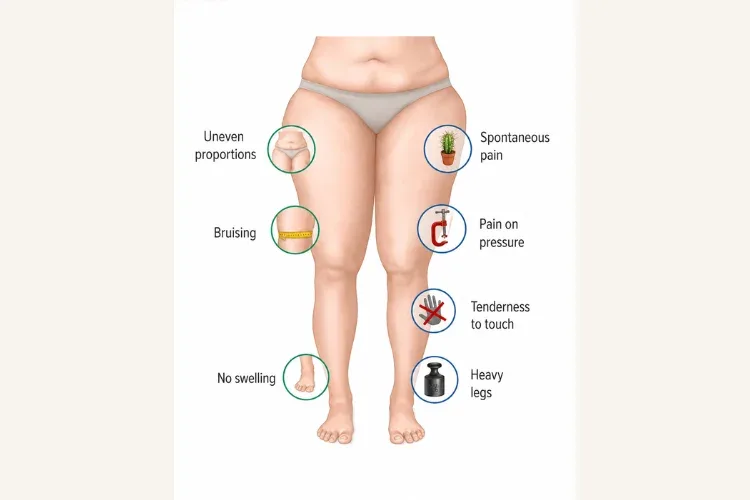
Lipoedema is a chronic condition that mainly affects women. It causes an atypical and disproportionate accumulation of fatty tissue, usually around the legs, thighs, hips and sometimes the arms.
The fat distribution is generally symmetrical meaning that both legs are affected in a similar way. However, the feet are usually not affected. This can help distinguish lipoedema from ordinary swelling or certain venous problems.
Lipoedema may cause:
- Legs that appear disproportionate compared with the upper body.
- A feeling of heaviness or tightness.
- Pain or sensitivity when the affected areas are touched.
- Easy bruising.
- Tiredness in the legs.
- Swelling that may become worse during the day.
Lipoedema Is Not Simple Weight Gain
It is important to understand that lipoedema is not caused simply by poor eating habits or a lack of exercise. The affected areas may remain unchanged despite dieting and physical activity, which can be emotionally difficult.
Hormonal changes may play a role in the development or worsening of lipoedema. Symptoms may first appear or become more noticeable during puberty, pregnancy or menopause.
Signs That May Suggest Lipoedema
Lipoedema is sometimes confused with obesity, cellulite or water retention. However, several signs may point towards it:
- The increase in size affects both sides of the body.
- The feet remain relatively slim compared with the ankles.
- The legs are painful or sensitive.
- Bruises appear easily.
- Weight loss does not always reduce the affected areas.
Important, these signs are for awareness only and are not a diagnosis. Only a healthcare professional or a specialist in lymphatic and venous conditions can confirm whether someone has lipoedema.
A Frequently Misunderstood Condition
Many people with lipoedema have spent years believing that they simply lacked willpower. In reality, lipoedema is a chronic condition that requires appropriate care and support.
It can affect both physical and emotional well-being. Pain, difficulty finding suitable clothing and comments from other people may affect self-confidence. It is therefore important to discuss lipoedema without judgement and seek appropriate medical advice.