
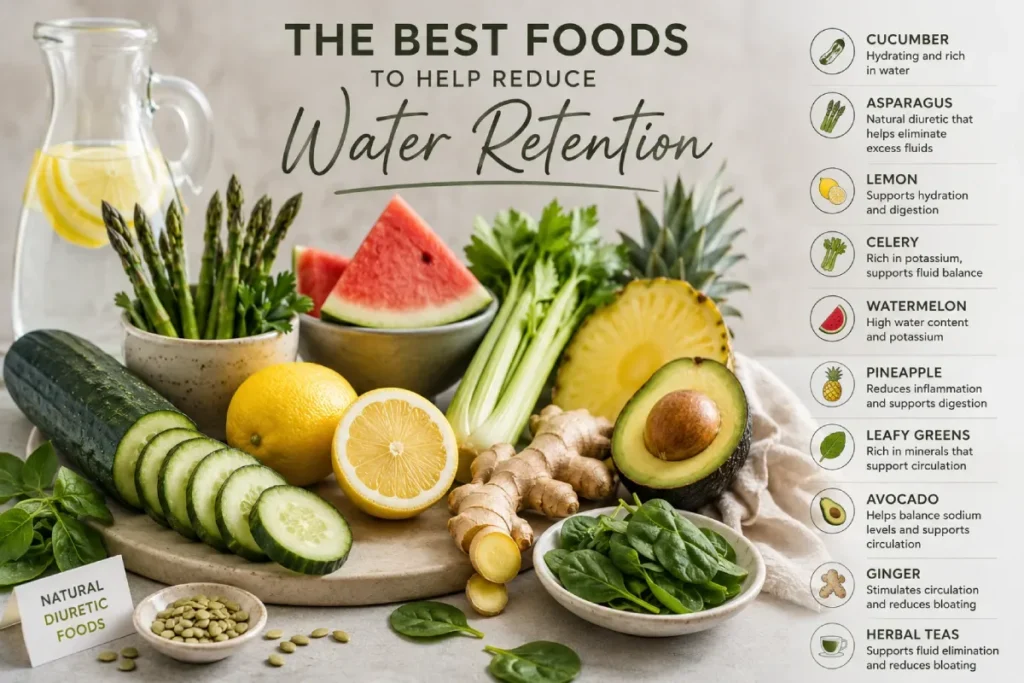
Water retention is often linked to:
- poor circulation,
- excess sodium,
- hormonal fluctuations,
- inflammation,
- stress,
- and sluggish lymphatic drainage.
While lifestyle and circulation play a major role, certain foods may naturally help support fluid balance and reduce feelings of puffiness or swelling.
1. Cucumber
Cucumber is naturally rich in water and contains compounds that may help support hydration and fluid elimination.
Benefits:
- high water content,
- refreshing and hydrating,
- low in sodium,
- supports digestion.
2. Asparagus
Asparagus contains natural diuretic compounds that may help the body eliminate excess fluids.
Benefits:
- supports urinary elimination,
- rich in antioxidants,
- helps reduce bloating.
3. Lemon
Lemon is often appreciated for its refreshing and detoxifying properties.
Benefits:
- supports hydration,
- rich in vitamin C,
- may help stimulate digestion.
Many people enjoy starting the day with warm lemon water to help reduce feelings of heaviness.
4. Celery
Celery is naturally rich in potassium and water.
Benefits:
- supports fluid balance,
- may help reduce bloating,
- contributes to hydration.
5. Watermelon
Watermelon contains a very high percentage of water and is naturally refreshing.
Benefits:
- hydrating,
- rich in potassium,
- helps support circulation and fluid balance.
6. Pineapple
Pineapple contains bromelain, an enzyme associated with digestive support and inflammation balance.
Benefits:
- may help reduce feelings of swelling,
- supports digestion,
- refreshing and hydrating.
7. Leafy Greens
Spinach, arugula and other greens are rich in:
- potassium,
- magnesium,
- antioxidants.
These nutrients may help support:
- circulation,
- fluid regulation,
- and tissue health.
8. Avocado
Avocado is rich in healthy fats and potassium, which may help counterbalance excess sodium.
Benefits:
- supports circulation,
- contributes to fluid balance,
- highly nourishing for tissues.
9. Ginger
Ginger is widely used for its circulation-supporting properties.
Benefits:
- may help stimulate circulation,
- supports digestion,
- warming and anti-inflammatory effect.
10. Herbal Teas
Certain herbal teas are traditionally associated with reducing water retention:
- green tea,
- dandelion tea,
- ginger tea,
- fennel tea.
These may help support:
- circulation,
- digestion,
- and fluid elimination.
Foods That May Worsen Water Retention
Some habits may contribute to fluid stagnation:
- excessive sodium,
- ultra-processed foods,
- alcohol,
- excess sugar,
- dehydration,
- lack of movement.
Poor sleep and chronic stress may also influence:
- inflammation,
- circulation,
- and water retention.
A Global Approach Is Essential
Nutrition alone is not always enough to reduce water retention.
Long-lasting improvements often require a combination of:
- hydration,
- movement,
- stress management,
- circulation support,
- and lymphatic stimulation.
Modern technologies such as ICOONE and Stendo may help support:
- lymphatic drainage,
- microcirculation,
- tissue oxygenation,
- and overall body comfort.
Conclusion
Water retention is not simply about “drinking too much water.”
It is often linked to circulation, inflammation, lifestyle and tissue congestion.
Choosing foods rich in:
- water,
- potassium,
- antioxidants,
- and anti-inflammatory compounds may help the body maintain better fluid balance and reduce feelings of puffiness and heaviness naturally.