
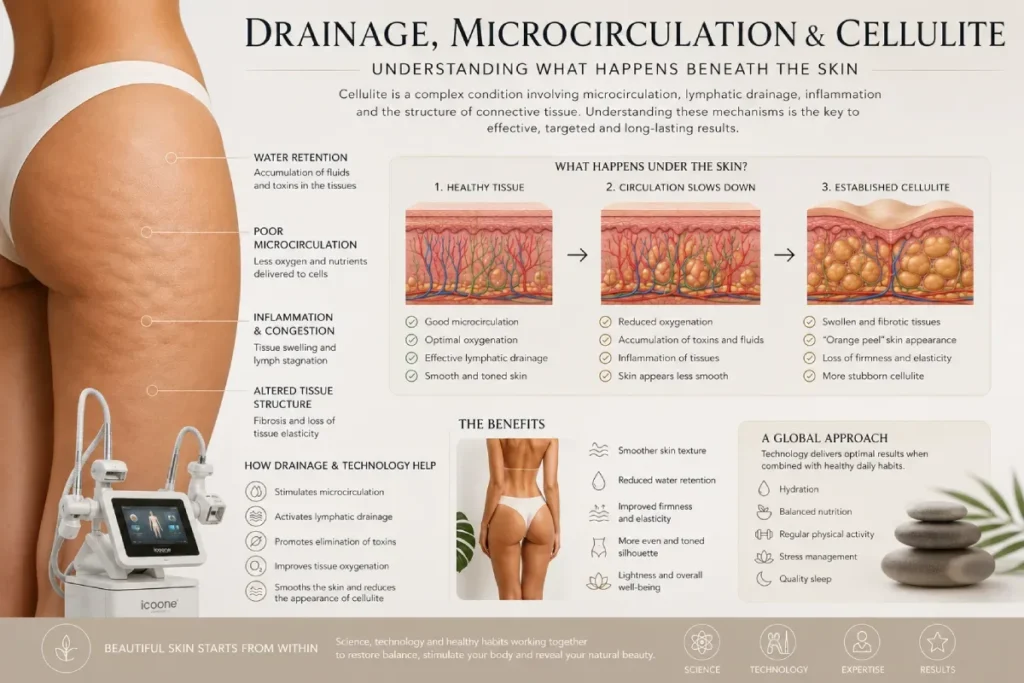
Cellulite is often described as simply a fat-related issue. In reality, it is far more complex.
Today, research in aesthetics and physiology shows that cellulite involves several mechanisms:
- microcirculation,
- the lymphatic system,
- tissue inflammation,
- water retention,
- and the structure of connective tissue itself.
This is why even very slim women can still experience visible cellulite.
What Is Microcirculation?
Microcirculation refers to blood flow through the body’s smallest vessels:
- capillaries,
- venules,
- and tiny lymphatic vessels.
Its role is essential:
- delivering oxygen and nutrients to tissues,
- removing metabolic waste,
- maintaining skin quality,
- supporting healthy cellular exchanges.
When circulation slows down, tissues gradually become:
- more congested,
- less oxygenated,
- and more inflammatory.
This may contribute to:
- heavy legs,
- swelling,
- water retention,
- orange-peel skin texture,
- and loss of firmness.
The Role of the Lymphatic System
Unlike blood circulation, the lymphatic system does not have a pump like the heart.
Lymph moves slowly thanks to:
- body movement,
- breathing,
- muscle contractions,
- and certain external mechanical stimulations.
Its role is fundamental:
- eliminating cellular waste,
- regulating tissue fluids,
- supporting the immune system,
- reducing tissue inflammation.
When lymphatic drainage becomes inefficient, fluids stagnate within the tissues. This stagnation creates an environment that favors water-retention cellulite and tissue congestion.
Why Does Cellulite Develop?
Cellulite is multifactorial.
It often results from a combination of:
- fat accumulation,
- sluggish circulation,
- water retention,
- tissue fibrosis,
- chronic low-grade inflammation,
- hormonal factors.
In women, connective tissue fibers are arranged vertically, allowing fat cells to push more easily toward the skin surface.
This specific tissue structure explains why cellulite can affect even athletic or slim women.
The Different Types of Cellulite
Water-Retention Cellulite
Mainly linked to:
- fluid retention,
- poor venous and lymphatic circulation,
- tissue congestion.
It is often associated with:
- swelling,
- heavy legs,
- feelings of puffiness or stagnation.
Adipose Cellulite
More related to:
- fat storage,
- lifestyle factors,
- metabolic imbalance.
Fibrous Cellulite
An older and more established form of cellulite.
The tissues become:
- denser,
- more rigid,
- and sometimes painful.
This type is often harder to treat because connective tissue fibers have thickened over time.
Why Drainage May Improve the Appearance of Cellulite
Mechanical drainage and tissue stimulation may help:
- improve microcirculation,
- stimulate cellular exchanges,
- support fluid drainage,
- reduce tissue congestion,
- enhance tissue oxygenation.
When tissues are better oxygenated and less congested:
- the skin may appear smoother,
- swelling may decrease,
- skin texture can improve,
- tissues regain softness and flexibility.
Modern Tissue Stimulation Technologies
Modern non-invasive technologies such as ICOONE use multi-microstimulation techniques designed to work gently and precisely on the tissues.
The goal is to:
- stimulate microcirculation,
- support lymphatic drainage,
- improve tissue quality,
- encourage skin remodeling.
These approaches are particularly interesting because they respect the tissues while allowing targeted and progressive stimulation.
Why Results Require Multiple Sessions
Cellulite does not appear overnight. It often develops over years of:
- slowed circulation,
- tissue congestion,
- and structural changes within connective tissue.
This is why the most visible improvements usually occur progressively over multiple sessions.
Consistency remains essential to:
- support circulation,
- maintain tissue quality,
- and promote long-term results.
A Global Approach Remains Essential
No technology can replace:
- proper hydration,
- movement,
- quality sleep,
- balanced nutrition,
- stress management.
Chronic stress may particularly influence:
- circulation,
- inflammation,
- water retention,
- and hormonal mechanisms involved in cellulite.
Conclusion
Cellulite is not simply a cosmetic or fat-related concern. It reflects a complex combination of:
- microcirculation,
- lymphatic drainage,
- tissue inflammation,
- and connective tissue quality.
Understanding these mechanisms allows for a more intelligent, progressive and body-respectful approach.
Today, modern drainage and mechanical stimulation technologies offer promising non-invasive solutions to help improve:
- skin quality,
- circulation,
- and overall tissue harmony.
Discover Our Advanced Body Contouring & Drainage Treatments in Bali
Personalized consultations available at our wellness center.